Medical Device Sales Resume: How To Highlight Your Training & Experience
By: Jerry Morrison
Most medical device sales résumés fail before a human reads them. Roughly 90% of Fortune 500 companies screen with an applicant tracking system, and about 75% of candidates are filtered out before a recruiter looks. The fix is specificity: lead with clinical training rather than burying it, translate every transferable skill into device-relevant language, and quantify outcomes. "Strong communication skills" describes nearly every applicant; a number describes only you.
You've got the degree. You've done the research. You want to break into medical device sales. But your resume keeps getting lost in a pile of other applicants who look exactly like you on paper.
Here's the frustrating reality: most "entry-level" medical device sales jobs ask for 2+ years of experience. So how do you stand out when you're just getting started?
It comes down to how you present your training and experience on your medical device sales resume. The right approach can make hiring managers stop scrolling and start calling.
Why medical device sales is worth the effort
Before diving into resume strategy, let's talk about why this career path attracts so many applicants in the first place.
According to Glassdoor, the average total compensation for medical device sales representatives sits around $157,251 per year, with the 90th percentile at $266,054 (December 2025). That’s significantly higher than most sales positions, and the earning potential grows substantially with experience and specialization.
The industry itself is booming. The global medical device market was valued at over $542 billion in 2024 and is projected to reach over $1.1 trillion by 2034. This growth translates to consistent demand for skilled sales professionals who can navigate complex healthcare environments.
The U.S. Bureau of Labor Statistics projects about 142,100 annual openings for wholesale and manufacturing sales representatives, with technical and scientific product sales (which includes medical devices) commanding median wages around $160,000 per year for established representatives.
But here's the catch: competition is fierce. And your resume is the first hurdle.
Why medical device sales resumes get ignored
Hiring managers in this industry see hundreds of resumes from candidates with business degrees, marketing backgrounds, and "strong communication skills." That description fits about 90% of applicants.
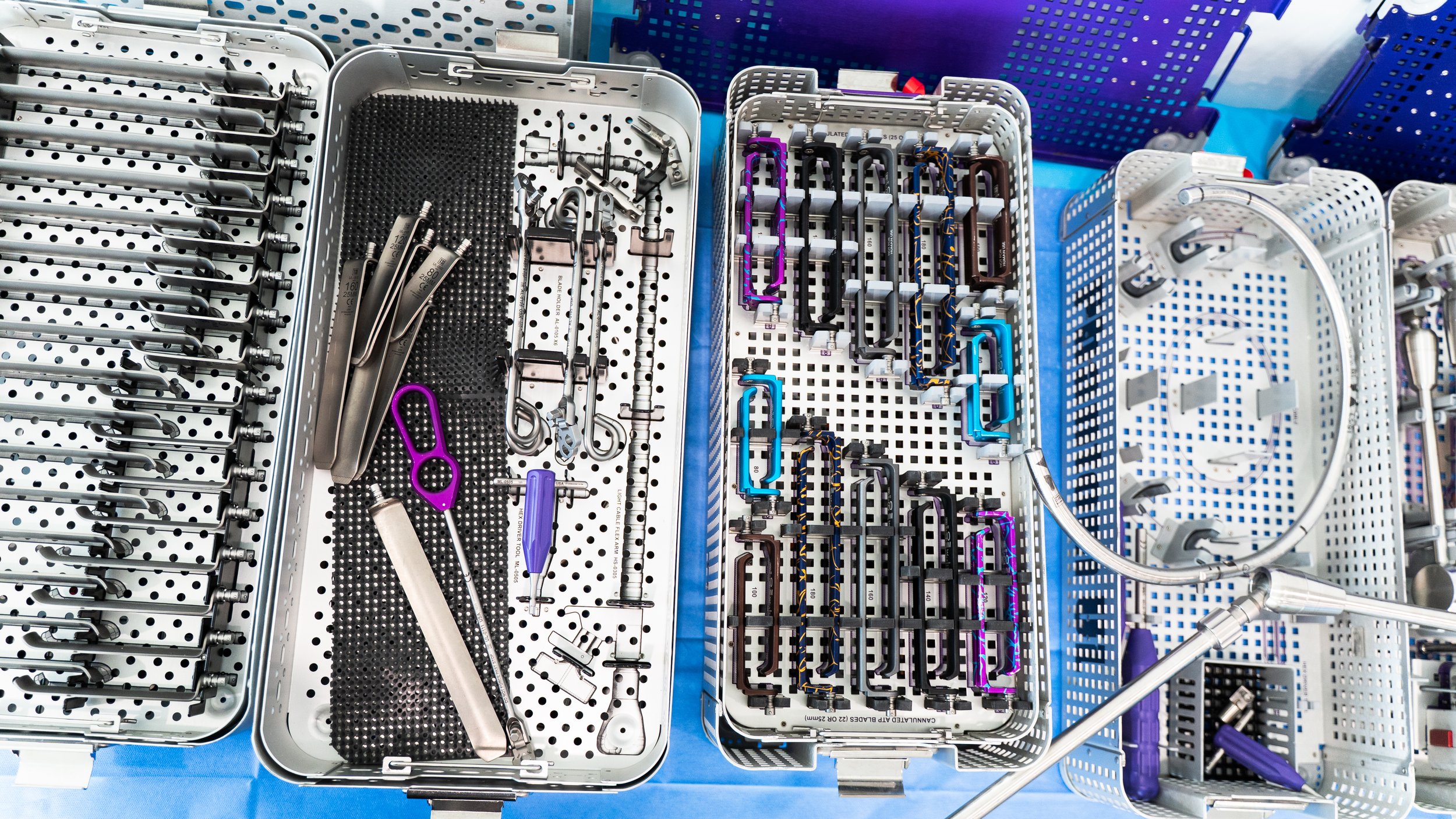
What they're actually looking for is evidence that you understand what happens in an operating room. They want to know if you've held surgical instruments, that you understand anatomy, and that you won't freeze up the first time you're standing next to a surgeon during a procedure.
Sales industry experts say that professionals from diverse backgrounds including nurses, recent graduates, and career changers have all successfully broken into medical device sales. What sets them apart isn't their prior experience in the field; it's how they present their transferable skills and demonstrate genuine preparation for the role.
Generic resumes don't communicate any of that. And that's why they end up in the rejection pile.
Understanding the ATS challenge
Before a human ever sees your resume, it likely passes through an Applicant Tracking System (ATS). The Columbia University's Career Education Center states that approximately 90% of Fortune 500 companies use these systems to manage applications. The software scans your resume, scores your qualifications against the job description, and ranks your application accordingly.
Here's the sobering statistic: roughly 75% of candidates get filtered out before a recruiter even glances at their materials.
The Harvard Career Services team recommends tailoring your resume to each position by referencing specific skills and experiences from the job description. This isn't about gaming the system; it's about clearly demonstrating that your background aligns with what the employer needs.
For medical device sales positions, that means including industry-specific terminology naturally throughout your resume. Terms like "operating room," "surgical instruments," "physician relationships," and specific product categories should appear where relevant.
What belongs on a medical device sales rep resume
Your medical device sales rep resume needs to do more than list your education and part-time jobs. It needs to tell a story about why you're ready for this specific career.
Lead with relevant training & certifications
If you've completed any hands-on medical device sales training, put it near the top of your resume. This isn't the place to be modest. Industry experts emphasize focusing on accomplishments rather than job descriptions. Hiring managers want to see proof that you can help their business.
When listing training, include specifics:
Cadaver lab experience: Real anatomical training carries more weight than plastic model simulations. Surgeons and hiring managers can tell the difference between someone who's watched a video and someone who's been in the room working with actual tissue.
Operating room observation hours: Document any OR shadowing you've completed, including the types of procedures observed and total hours.
Surgical instrument handling:List specific instruments or device types you've trained with.
Product knowledge certifications: Include any formal certifications related to medical devices, anatomy, or sales methodology.
Training that includes actual OR exposure and cadaver work communicates serious commitment to the field. It tells hiring managers you've invested in understanding the environment where you'll be working.
Highlight transferable skills (the right way)
Maybe you've worked as a personal trainer, surgical tech, or nurse. Perhaps you're coming from pharmaceutical sales. These backgrounds give you advantages that other candidates don't have.
But you can't just list your previous job title and expect hiring managers to connect the dots. Harvard Business Review recommends opening strong with a summary of your expertise and the use of an accomplishments section to link your experience directly to the job requirements.
Spell it out for hiring managers:
Anatomy knowledge:"Applied understanding of musculoskeletal anatomy through 3 years as a certified personal trainer, including assessment of movement patterns and injury rehabilitation protocols"
OR familiarity:"Observed 50+ surgical procedures as a surgical technologist, comfortable navigating sterile environments and interfacing with surgical teams"
Sales experience:"Exceeded pharmaceutical sales quota by 15% for 8 consecutive quarters while managing relationships with 40+ healthcare providers"
Clinical background:"5 years as a registered nurse in orthopedic surgery, with direct experience assisting surgeons and explaining post-operative protocols to patients"
The key is translating what you've done into language that matters for medical device sales. Don't make them guess how your experience applies.
Quantify everything you can
Numbers grab attention. Indeed's career advice emphasizes that concrete examples of expertise, quantified with numbers where possible, help your resume stand out both to ATS systems and human reviewers.
Instead of saying you "helped increase sales," write that you "grew territory revenue by 22% over 12 months." Rather than "assisted with training," try "trained 8 new team members on product protocols, reducing onboarding time by 2 weeks."
Even if you're early in your career, find ways to add specifics:
Did you maintain a 3.8 GPA while working 20 hours a week? That shows work ethic and time management.
Manage a budget for a student organization? Include the dollar amount.
Hit personal training client retention rates above the gym average? Quantify the difference.
Complete a training program with a specific number of OR shadowing hours? List them.
Put those numbers on your medical device sales resume. They provide evidence for your claims and make your accomplishments concrete rather than abstract.
Resume sections that actually matter
Professional summary
Skip the objective statement. As career experts point out, hiring managers only spend 6-10 seconds on their first look at your resume. You need to grab their attention immediately.
Write 2-3 sentences that communicate your relevant qualifications right away.
Weak:"Recent graduate seeking entry-level position in medical device sales where I can apply my communication skills and passion for healthcare."
Strong: "Business graduate with hands-on cadaver lab training and 40+ hours of OR shadowing experience. Completed medical device sales certification with focus on orthopedic instrumentation and surgical workflows. Comfortable in sterile environments with demonstrated ability to build relationships with healthcare professionals."
See the difference? The second version tells the hiring manager exactly what you bring to the table. It answers the question "Why should I keep reading?" within the first few lines.
Training & certifications section
Create a dedicated section for industry-specific training. This is where your investment in real preparation pays off. Format it clearly:
Medical Device Sales Training | Med RETI | [Completion Date]
Completed cadaver lab training covering varies surgical procedures and surgical anatomy
40+ hours of operating room shadowing with varies surgeons
Hands-on training with surgical instruments and device handling protocols
Instruction from active industry professionals with 50+ years combined field experience
If your training came from working professionals currently in the field rather than retired instructors, that's worth mentioning. Current knowledge matters in an industry that evolves constantly with new products, techniques, and regulatory requirements.
Experience section
List your work history in reverse chronological order, but focus your bullet points on achievements that translate to medical device sales success. As HBR's resume guidance points out, you should show off your skills and let numbers do the talking.
Prioritize accomplishments that demonstrate:
Relationship building with healthcare professionals: Medical device sales is fundamentally about trust. Show you can build and maintain professional relationships over time.
Technical product knowledge: Demonstrate you can learn complex information and communicate it clearly.
Meeting quotas or performance targets: Any evidence of sales success, even in unrelated industries, matters.
Working under pressure: The OR is a high-stakes environment. Show you can perform when it counts.
Learning complex information quickly: New products, procedures, and regulations require constant learning.
Don't waste space on generic duties like "answered phones" or "attended meetings." Every bullet point should answer the question: "Why does this make me a better candidate for medical device sales?"
Skills section
Indeed's ATS guidance recommends using a skills section to help your resume get noticed by both automated systems and recruiters. For medical device sales, include both hard and soft skills:
Hard Skills: Surgical instrument knowledge, anatomy terminology, CRM software (Salesforce, etc.), medical device regulations, sterile technique, specific procedure knowledge (orthopedic, cardiovascular, etc.)
Soft Skills: Relationship building, consultative selling, presentation skills, territory management, physician communication, team collaboration
Keep these relevant to the specific position. Don't pad your skills section with generic terms that don't add value.
Common medical device saLes resume mistakes
Mistake #1: Being too generic
Your resume should look different from someone applying to general sales positions. Use industry terminology. Reference specific procedures, products, or surgical specialties when you can. A resume that could apply to any sales job won't stand out for medical device positions.
Mistake #2: Burying your training
If you've invested in quality medical device sales training, don't hide it at the bottom of your resume under "Additional Information." That training might be your strongest differentiator, especially if you're competing against candidates with more traditional work experience. Move it up where hiring managers will see it in their first 10-second scan.
Mistake #3: Ignoring ATS optimization
MIT's Career Advising center warns against using complex formatting that confuses applicant tracking systems. Avoid tables, graphics, headers/footers, and unusual fonts. Stick to standard section headings like "Work Experience," "Education," and "Skills."
Include keywords from the job description naturally throughout your resume. "Medical device sales," "surgical," "OR experience," and specific product categories should appear where relevant. But don't keyword-stuff; ATS systems (and humans) can tell when you're artificially inflating your resume.
Mistake #4: Leaving off industry connections
If your training program connected you with working professionals in the industry, or if you've built relationships through networking, reference these appropriately. "Completed training program with direct mentorship from active medical device sales professionals" signals you have real connections and understand the industry from people currently doing the job.
Mistake #5: Using outdated formatting
"References available upon request" is no longer in style. Similarly, objective statements have been replaced by professional summaries. Keep your formatting current to avoid looking out of touch.
How to build resume-worthy experience
What if you're reading this and realizing your resume is thin on relevant experience? You have options.
Breaking into medical device sales typically requires three things: education, experience, and connections. The fastest path is structured training that provides hands-on experience in weeks rather than years.
Look for programs that offer:
Real cadaver lab work: Not plastic models or simulations. Actual anatomical training that gives you credible talking points in interviews.
Operating room shadowing with surgeons: Direct exposure to the environment where you'll be working. Understanding surgical workflows, sterile protocols, and how devices are actually used in procedures.
Instruction from active industry professionals: People currently working in medical device sales who can teach current best practices, not outdated methods from years ago.
Connections to hiring managers: Industry networks that can help you get in front of decision-makers, not just generic job boards.
Some programs charge $20,000 or more and deliver mostly classroom instruction with retired instructors. Others, like Med RETI, offer hands-on training with real cadaver labs, OR shadowing, and active industry connections at about half that price. They're selective about who they accept because they understand that right-fit candidates are more likely to succeed and represent the program well.
Do your research before investing. Ask about the training methodology, instructor backgrounds, job placement support, and what percentage of the curriculum involves actual hands-on experience versus classroom theory.
Networking: The hidden resume builder
Your resume doesn't exist in a vacuum. Industry experts emphasize that networking is vital in medical device sales jobs. Representatives depend on strong client relationships to get their devices through hospital purchasing departments, and getting a job also relies on your ability to make meaningful connections.
If you don't know anyone in the industry, LinkedIn can be your starting point. Join groups like Medical Device Sales Professionals and Medical Device Guru. Engage with content from people working in roles you're targeting. Reach out to alumni from your school who've made it into medical device sales.
When you network effectively, you can sometimes bypass the ATS entirely. A referral from a current employee carries significant weight and can move your resume directly to the hiring manager's desk.
Your resume should reflect your networking efforts. If you've had informational interviews with current reps, attended industry events, or participated in professional groups, find ways to demonstrate that engagement. It shows initiative and genuine interest in the field.
The interview connection
A strong medical device sales resume gets you interviews. But what happens after that depends on whether you can back up what's on paper.
According to the Food and Drug Law Institute, the American College of Surgeons has affirmed that medical device sales representatives provide surgeons with important technical information and assistance. The complexity of procedures often requires this specialized expertise, with surgeons noting that representatives are present in nearly 100% of complicated cases such as spine surgery and joint implants.
That means when you sit down for an interview, hiring managers expect you to demonstrate the technical knowledge and procedural understanding that makes you valuable in the OR. They'll ask about specific surgical procedures. They'll want to know how devices integrate into surgical workflows. They might even test your product knowledge on the spot.
If your resume claims you have hands-on training, you need the knowledge to prove it. Can you explain the steps of a total knee replacement? Do you understand the difference between anterior and posterior approaches in spine surgery? Can you discuss why a surgeon might choose one implant over another based on patient anatomy?
This is why training quality matters so much. Classroom-only programs using plastic models don't prepare you to answer these questions with confidence. Real cadaver lab experience and OR shadowing give you genuine stories and knowledge to draw from. You can speak from actual observation, not just theory.
Your resume is a living document
Don't create one resume and submit it everywhere. Harvard's career guidance emphasizes tailoring your resume to the type of position you're seeking. This doesn't mean you need to start from scratch for every application, but you should adjust emphasis based on what each employer values.
If one company focuses on orthopedic devices and another on cardiovascular, your resume should highlight different aspects of your training and experience. If a job posting emphasizes relationship building, make sure your accomplishments in that area are prominent.
Keep a "master resume" with all your experiences, then customize versions for specific applications. Track which versions get responses and refine your approach over time.
Next steps
Take an honest look at your current resume. Does it communicate real, relevant experience? Or does it blend in with every other business graduate applying for the same positions?
Ask yourself these questions:
Does my professional summary grab attention in the first 10 seconds?
Have I quantified my accomplishments with specific numbers?
Is my training and certification section prominent and detailed?
Have I translated my transferable skills into medical device sales language?
Is my resume formatted for ATS compatibility?
Do I have genuine OR experience or cadaver lab training to discuss in interviews?
If you need to build credentials that will actually make a difference, consider investing in training that gives you cadaver lab experience, OR exposure, and connections to people who are hiring. Programs like Med RETI offer real hands-on training with active industry professionals at half the cost of competitors, with selective admissions that ensure you're the right fit for a successful career in this field.
The medical device sales industry isn't going anywhere. With the global market projected to nearly double over the next decade and strong earning potential for those who break in, the investment in proper preparation pays for itself quickly.
Your resume is the first step. Make it count.